
Top 10 ERP Software Solutions for Small to Mid-Sized Companies in 2025
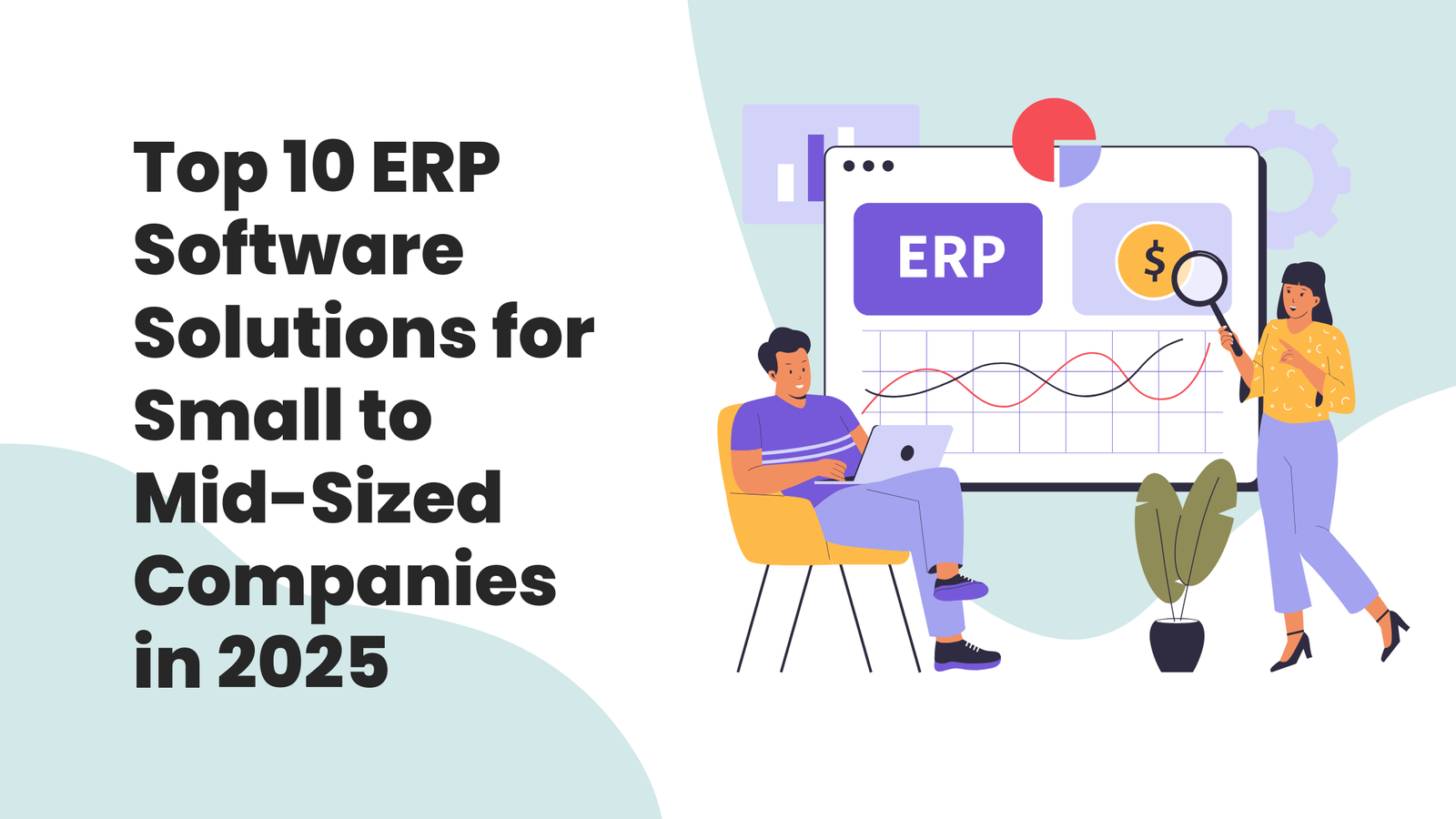
Running a growing business often means juggling spreadsheets, disconnected systems, and long email chains just to keep operations running smoothly. ERP software promises to replace that chaos with one unified platform that connects accounting, inventory, HR, sales, and more. But which ERP systems actually work well for small to mid-sized companies?
We’ve done the research and compiled a list of the top 10 ERP software solutions for 2025 that are not just powerful but also practical for businesses that don’t have an enterprise-sized budget or IT department.
1. Odoo ERP
Odoo stands out for its flexibility. It offers a wide range of business applications—from sales and CRM to inventory and accounting—all seamlessly integrated in one platform. What makes Odoo especially attractive for small to medium businesses is its modular structure. You can start with a few apps and add more as your business grows. Its open-source foundation also means you can tailor it exactly to your needs, whether you’re a retailer, manufacturer, or service provider.
2. NetSuite by Oracle
NetSuite is a cloud-native ERP solution designed to streamline financials, operations, and customer relationships. It’s particularly effective for companies experiencing fast growth or planning to scale. Everything is hosted in the cloud, which means you get real-time visibility across departments without managing any infrastructure. NetSuite’s dashboard is one of the most intuitive in the market, making it easier for business owners to keep tabs on KPIs, sales performance, and financial health.
3. SAP Business One
SAP Business One brings the power of a globally trusted ERP brand into a package suited for smaller companies. It combines modules for inventory, purchasing, production, and finance into a single ecosystem. Whether you’re managing supply chains, customer data, or reporting, this system offers deep functionality. It’s especially useful for businesses that need reliable control over stock levels and production planning.
4. Microsoft Dynamics 365 Business Central
Business Central integrates tightly with Microsoft’s suite of tools—like Outlook, Teams, and Excel—making it a great choice for companies already familiar with that environment. It connects finance, sales, customer service, and inventory in a clean, unified dashboard. Users often appreciate how easy it is to automate recurring tasks, track sales pipelines, and forecast cash flow, all without needing a full IT team.
5. Zoho ERP (Zoho One)
Zoho offers a simplified ERP experience wrapped into an affordable, all-in-one suite. Zoho One bundles dozens of business apps into a single login, covering everything from CRM and HR to invoicing and inventory. It’s a great fit for modern teams that value flexibility, automation, and clean user interfaces. Because it’s entirely cloud-based, you can manage your operations from anywhere—even on mobile.
6. Sage Intacct
Sage Intacct is tailored for businesses that want deep control over financial management. It delivers powerful tools for general ledger, budgeting, expense tracking, and multi-entity consolidation. The reporting features are especially strong, making it easier for leadership teams to make smart, data-driven decisions. Its strength in financial automation makes it a favorite among accounting teams and CFOs.
7. Acumatica
Acumatica gives you robust ERP capabilities across finance, inventory, sales, and customer service. It’s known for offering industry-specific editions, which means manufacturing, retail, and construction businesses can all find tailored tools that match their needs. One of its biggest draws is its flexibility—you can integrate with third-party tools and even add unlimited users without extra costs, which is a major plus for collaborative teams.
8. ERPNext
ERPNext is an open-source platform that punches above its weight. It covers all the basics—accounting, CRM, HR, inventory, and even project management—while remaining lightweight and customizable. Tech-savvy businesses will appreciate how much control they have over how the software is configured and deployed. It’s ideal for teams that want to avoid vendor lock-in while still accessing powerful enterprise-grade features.
9. QuickBooks Enterprise
QuickBooks Enterprise takes everything small businesses love about QuickBooks and supercharges it for growing teams. It goes beyond simple bookkeeping by offering inventory management, advanced reporting, payroll integration, and more. It’s an excellent stepping stone for companies moving from basic accounting software toward a more comprehensive ERP solution. If you’re already using QuickBooks and need more firepower, this is the next logical step.
10. Infor CloudSuite Industrial (SyteLine)
Infor’s ERP solution is designed for companies with complex manufacturing and supply chain needs. It handles everything from materials planning and production scheduling to quality control and after-sales service. What sets it apart is its ability to manage highly detailed production workflows while still offering a clean user experience. Businesses in engineering, manufacturing, and logistics often turn to Infor when their operations outgrow entry-level solutions.
Final Thoughts
The right ERP software can transform how your business operates—eliminating bottlenecks, reducing manual work, and giving you real-time insights into every corner of your company. Whether you’re managing finances, tracking inventory, or improving customer service, there’s a solution in this list that fits your size and sector.
But choosing the software is just one part of the journey. Implementation, customization, and integration with your existing tools are just as important for success. If you’re looking to tailor your ERP to match your unique workflows or scale with your growing business, professional ERP development services can make all the difference.