
The Future of ERP: Trends to Watch in 2025 and Beyond
Enterprise Resource Planning (ERP) software has come a long way from its early days of simply managing inventory or accounting. In 2025 and beyond, ERP is no longer just a back-office tool—it’s becoming the backbone of digital-first, data-driven businesses. As technology continues to evolve, ERP systems are transforming in ways that promise faster processes, deeper insights, and better business outcomes.
Whether you’re considering a new ERP solution or optimizing an existing one, understanding what lies ahead is key to staying competitive. Let’s take a closer look at what’s shaping the future of ERP.
Why the Future of ERP Should Be on Your Radar
ERP systems are now expected to do more than just integrate core functions. They’re being tasked with solving business challenges, enabling remote work, automating repetitive tasks, and helping companies stay agile in uncertain markets.
As business environments shift, ERP must keep pace. Companies that overlook new trends may find themselves with outdated, rigid systems while their competitors benefit from scalable, intelligent solutions.
Top ERP Trends to Watch in 2025 and Beyond
1. AI and Machine Learning Are No Longer Optional
Expect ERP to become smarter. AI and machine learning are driving better forecasting, detecting anomalies in real-time, and streamlining everything from procurement to HR.
Example: AI-powered ERP can now predict when a machine might break down, allowing businesses to schedule maintenance in advance—minimizing downtime and saving costs.
2. The Cloud Takes the Lead
Cloud ERP adoption is accelerating. Why? Because it reduces upfront costs, enables anytime-anywhere access, and makes upgrades far easier. SaaS ERP providers like Odoo, Oracle NetSuite, and Microsoft Dynamics 365 are leading this shift.
And with hybrid work becoming the norm, cloud-native systems offer flexibility that on-premise ERPs can’t compete with.
3. IoT Integration Means Real-Time Precision
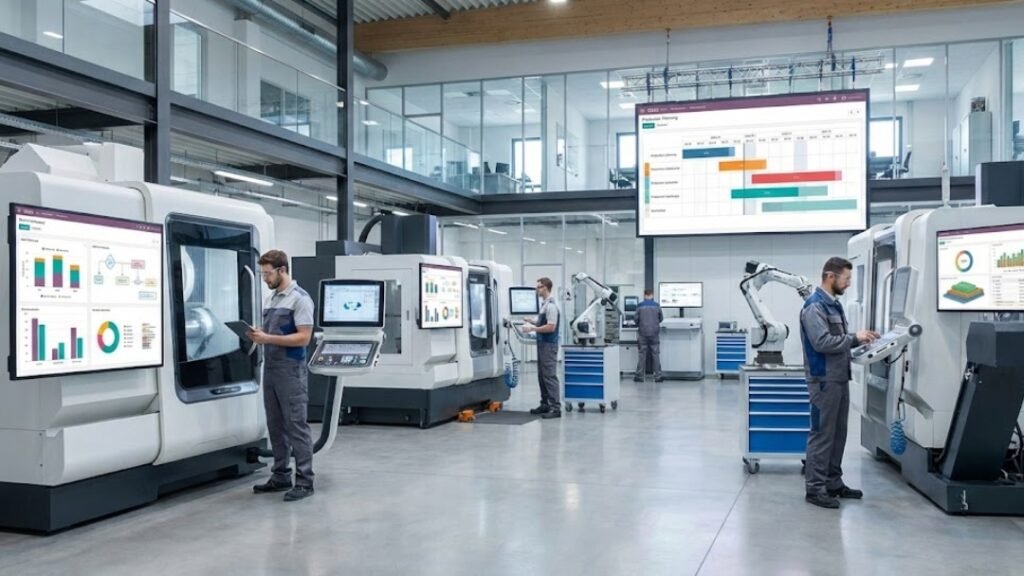
IoT-enabled ERP is transforming industries like manufacturing, agriculture, and logistics. Smart sensors feed data directly into ERP platforms, helping teams track machinery health, monitor shipments, and even manage energy use.
Real-time visibility across supply chains leads to faster decisions and fewer surprises.
4. Mobile ERP for On-the-Go Teams
As more employees work from the field, ERP is becoming more mobile. Whether it’s sales teams accessing customer data or field service workers updating job status, mobile ERP apps are streamlining operations.
In 2025, user-friendly mobile interfaces will be a must-have, not just a nice-to-have.
5. Hyperautomation Changes the Game
Hyperautomation goes beyond simple task automation. It combines robotic process automation (RPA), artificial intelligence, and advanced analytics within your ERP system.
Imagine automatically processing invoices, reconciling accounts, or onboarding employees—all without human intervention. That’s hyperautomation in action.
6. Business Intelligence Built Into the Core
Modern ERP systems are embracing advanced analytics and dashboards. Companies can now track KPIs in real time, analyze trends, and make data-backed decisions—all within a single platform.
The shift from reactive to proactive decision-making is a competitive advantage many businesses are already leveraging.
7. Blockchain Meets ERP
Blockchain isn’t just for crypto. It’s being integrated into ERP to provide secure, tamper-proof records—especially valuable in industries like pharmaceuticals, logistics, and food production.
Think transparent supply chains and reduced fraud—all tracked seamlessly within your ERP.
8. Industry-Specific ERP Gains Ground
Generic ERP solutions are taking a backseat to industry-focused platforms. Whether you’re in healthcare, manufacturing, or retail, ERP vendors are now offering tailored solutions that meet specific compliance, reporting, and operational needs.
Custom-fit solutions reduce the need for heavy modifications—and speed up ROI.
9. Sustainability Metrics Are Baked In
Businesses are under pressure to be more sustainable, and ERP is stepping up. New modules are tracking ESG goals, energy usage, and carbon emissions.
Companies can now report on sustainability metrics with the same ease they track financials—helping them stay transparent and compliant.
10. UX Will Make or Break User Adoption
One of the most underestimated trends? User experience. A clunky interface means low adoption and lots of frustration. ERP vendors are now investing in modern, intuitive dashboards, self-service tools, and personalized workflows.
A better UX translates directly into higher productivity.
Challenges in Keeping Up with ERP Evolution
Of course, innovation doesn’t come without hurdles. Businesses still face resistance to change, complex data migration processes, and the challenge of retraining staff. Not every company is ready to jump into AI-driven ERP or blockchain integration.
Planning ahead, selecting the right ERP partner, and prioritizing user education are key steps to overcoming these obstacles.
Vendors Shaping the ERP Landscape
Some of the top names driving ERP transformation include:
- SAP S/4HANA – Embracing cloud and AI technologies.
- Oracle NetSuite – A pioneer in cloud ERP for mid-size businesses.
- Microsoft Dynamics 365 – Known for seamless Office 365 integration.
- Odoo ERP – Rapidly growing with modular, customizable apps.
New startups are also pushing the envelope with lightweight, API-first ERP systems designed for niche use cases.
Getting Ready for What’s Next
ERP is evolving, but so should your approach to using it. Now’s the time to evaluate your current system:
- Is it scalable?
- Does it support mobile and cloud functionality?
- Can it integrate with AI or IoT tools?
Partnering with experienced ERP consultants can help you map out the next steps and implement solutions that grow with your business.
Smarter Decisions Begin with Smarter Systems
ERP platforms are quickly becoming more than just operational tools—they’re evolving into strategic assets that shape how businesses grow, adapt, and compete. With AI-driven automation, mobile-first interfaces, and sustainability tracking all becoming standard, staying current means staying relevant.
For many organizations, this shift has led to a quiet but significant realization: working with an experienced ERP development company can make the journey smoother. From selecting the right tools to customizing modules that fit like a glove, having the right expertise behind your system often makes all the difference.
In the end, it’s not just about adopting trends—it’s about choosing the right partners to help you build something sustainable, scalable, and truly future-ready.